Market NewsBeyond Meat’s “Meme Stock” Roller Coaster: Surging Over 10-Fold in a Week Before Crashing Back
Plant-based meat pioneer Beyond Meat (BYND.US) has once again taken center stage in the U.S. stock market. Fueled by a surge of retail investor enthusiasm on social media, the stock staged a wild rally over just three trading days. Between October 16 and October 22, its intraday price soared from US$0.503 to US$7.69, marking a staggering 1,047.76% gain, with trading volume spiking to US$11.4 billion. However, the bubble quickly burst — by the close on October 22, shares had fallen back to US$3.58, down more than 53% from the day’s high.
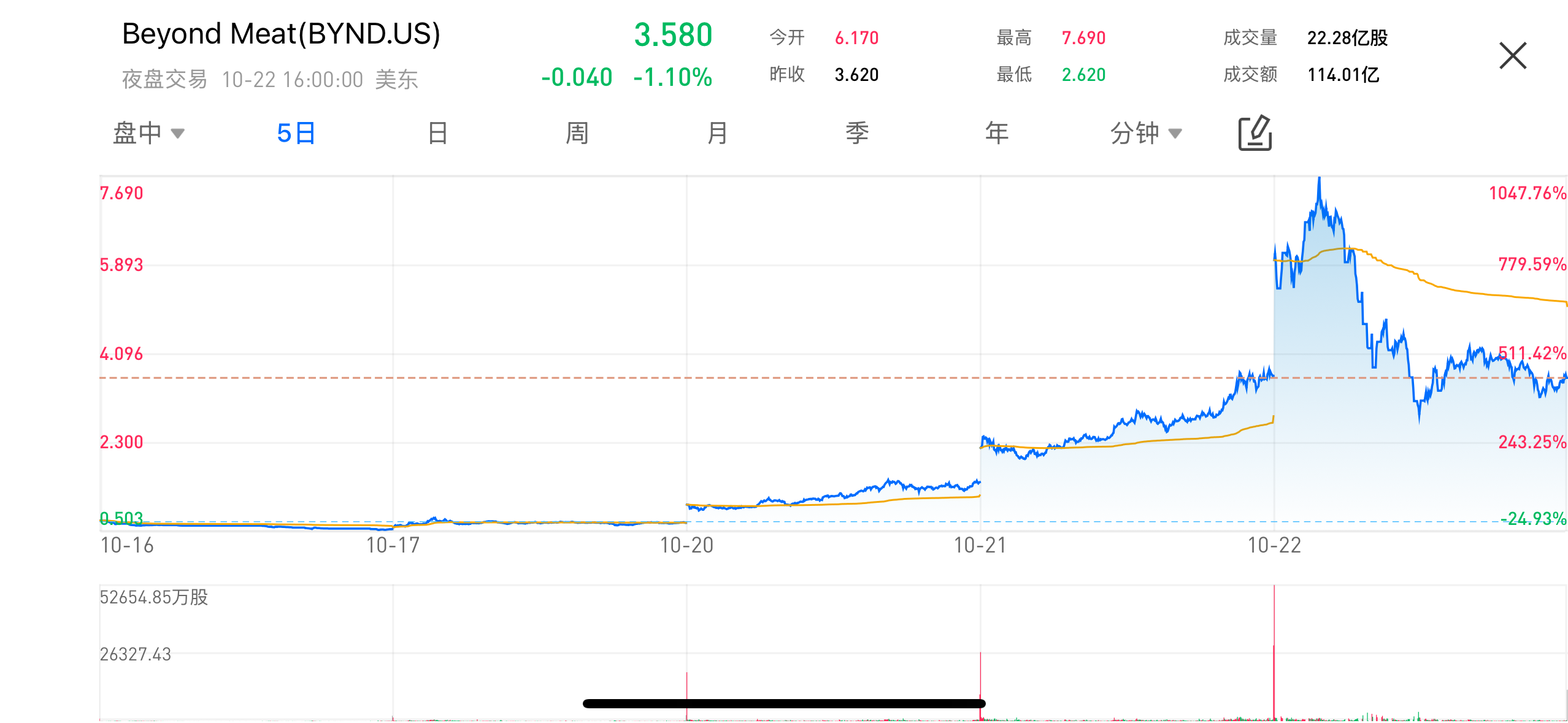 (Image source: uSMART HK App)
Drivers: A Triple Boost from Social Media, ETF Inclusion, and Short Squeeze
The explosive rally was driven by a combination of factors. Optimism over Beyond Meat’s debt restructuring plan spread rapidly across social media, with retail investors interpreting it as a sign of “strategic optimization.” This sentiment wave sparked a frenzy of retail buying. Meanwhile, Roundhill Investments announced that Beyond Meat would be added to its Meme Stock ETF (MEME.US) — a move that fueled expectations of institutional inflows and further intensified buying pressure.
Crucially, with short interest at 81.8%, the stock became the perfect setup for a short squeeze, forcing bearish traders to cover their positions and amplifying the rally — a familiar pattern in meme stock dynamics.
Fundamental Concerns: The Harsh Reality Behind the Hype
Despite its meteoric rise, Beyond Meat’s fundamental outlook remains bleak. The company has been loss-making for several consecutive years, with demand for plant-based meat continuing to stagnate. The broader industry faces growth headwinds, while Beyond Meat itself struggles with a heavy debt load. Prior to this surge, the stock had fallen below US$1, effectively turning into a “penny stock” — a clear signal of the market’s pessimism toward its business prospects.
Market Take: A Liquidity-Driven Frenzy Detached from Fundamentals
Analysts describe the episode as a classic meme-stock liquidity event, where price movements are largely decoupled from company fundamentals. Instead, short-term volatility is fueled by social media sentiment, collective retail momentum, and technical short-covering dynamics. Similar episodes have occurred in recent years, often characterized by sharp surges and equally rapid reversals. Without precise timing, retail investors risk heavy losses once the momentum fades.
Investor Takeaway: The High-Risk Nature of Meme Stocks
The Beyond Meat saga underscores the extreme risks of meme-stock trading. For retail investors, such moves resemble speculative sentiment-driven rallies rather than value-based investing. Those who do participate must remain clear-headed about the volatility, implement strict stop-loss limits, and recognize the speculative nature of such trades. For more conservative investors, staying on the sidelines while observing the underlying drivers may be the wiser choice.
How to Buy Beyond Meat on uSMART HK
After logging into the uSMART HK app, click on “Search” at the top right of the page, input the stock code (BYND.US) to access the details page and view transaction details and historical trends. Then click the “Trade” button at the bottom right, select the “Buy/Sell” option, fill in the transaction conditions, and submit your order.
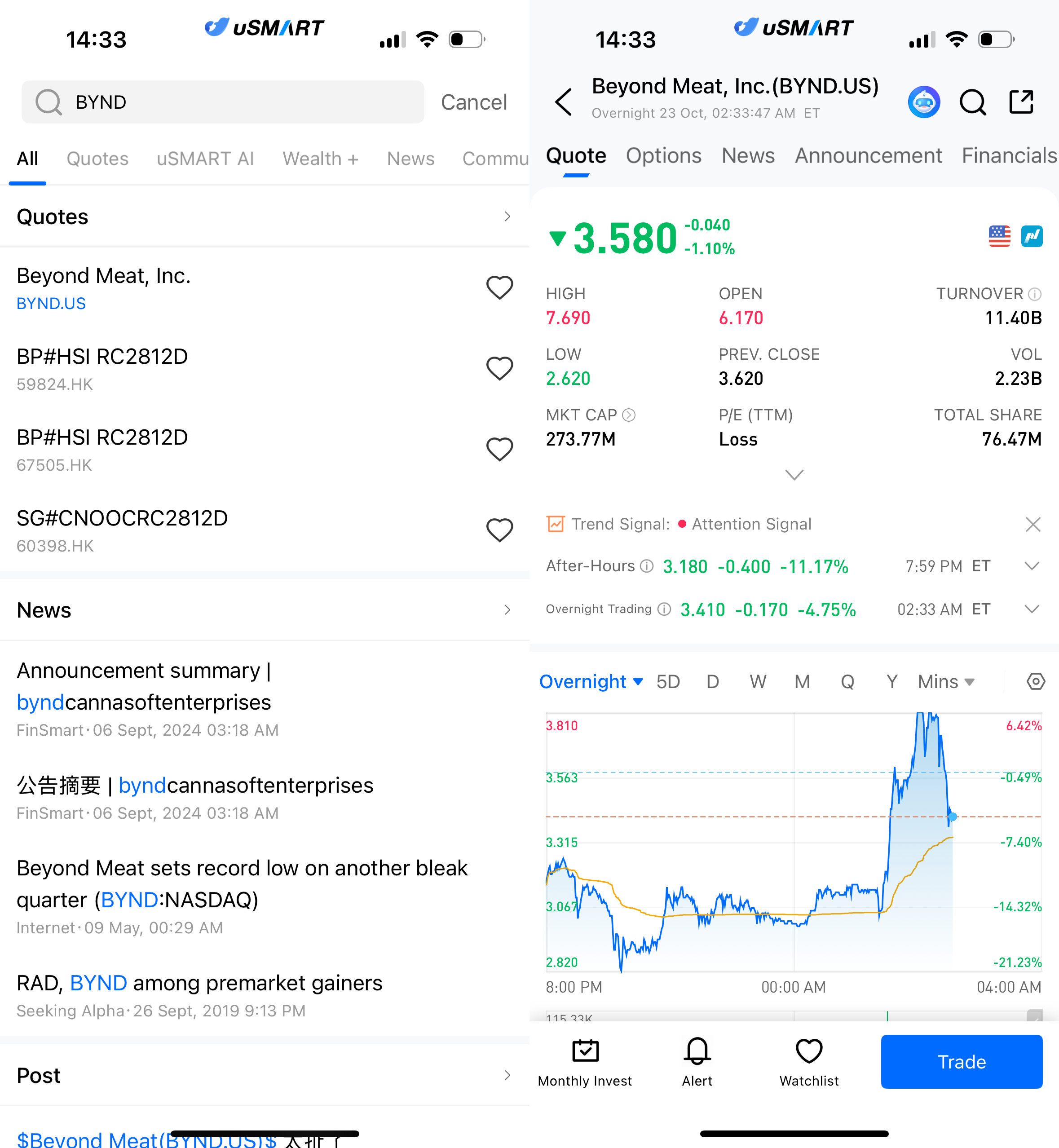 (Image source: uSMART HK App)


More Content