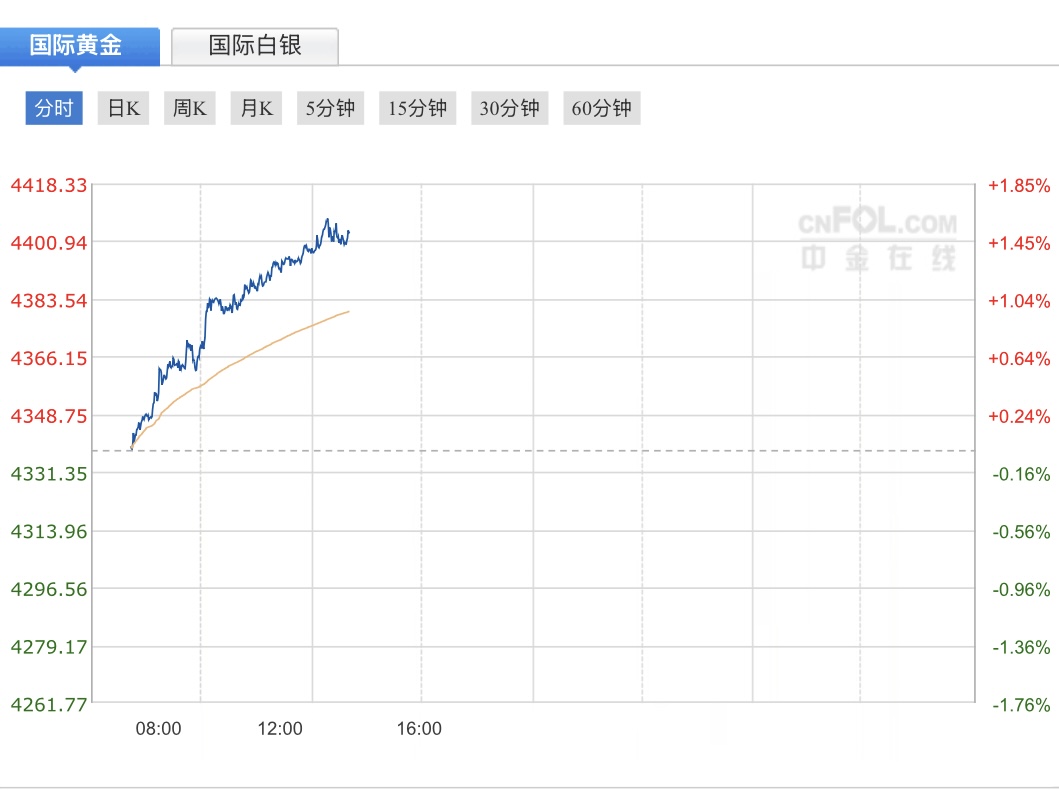
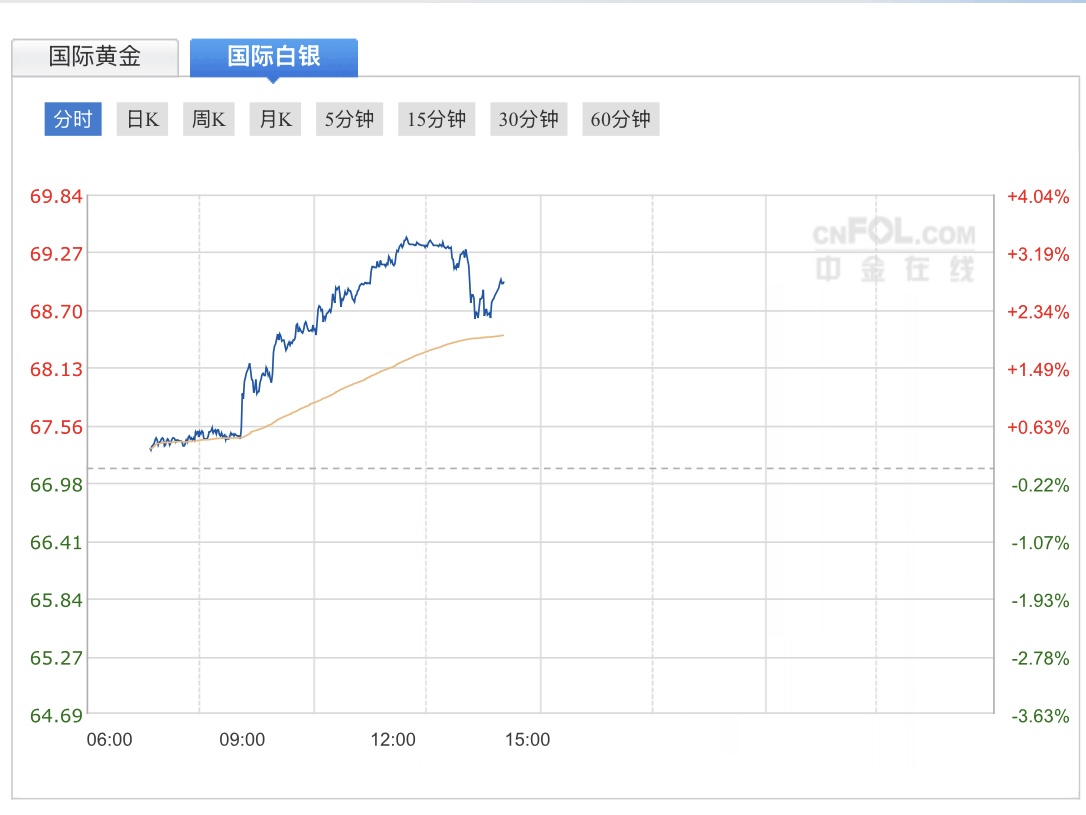
Amid rising volatility in global financial markets, the precious metals market has reached a key breakthrough. On Monday, the international gold price rose to around 4418.33, up about 1.85% on the day; the international silver price surged to 69.84, increasing by over 4%. Both reached historic highs simultaneously, becoming the most eye-catching asset class in the current commodity market.
(Image Source: Zhongjin Online)
(Image Source: Zhongjin Online)
Rising Safe-Haven Demand Makes Precious Metals a Core Asset Allocation
Behind the simultaneous rise in gold and silver prices is a concentrated release of global safe-haven demand. Currently, the global economic growth outlook remains uncertain, with significant divergences among major economies on issues such as monetary policy paths, inflation recovery rates, and fiscal sustainability, causing overall market risk appetite to remain under pressure. Against this backdrop, precious metals with long-term value preservation properties are once again favored by investors.
At the same time, recurring market risk events have amplified the appeal of safe-haven assets. Investors are becoming more cautious in asset allocation, directing more funds into traditional safe-haven assets like gold and silver, which has provided continued buying support for precious metals at high levels.
Interest Rate Expectations Become a Key Driver, Downward Real Rates Continue to Support Prices
From a macro perspective, changes in monetary policy expectations are also a significant driver behind the recent rise in gold and silver prices. As market expectations shift towards more dovish stances from major central banks, expectations for falling real interest rates are gradually taking shape. With the relative yield shift between non-interest-bearing assets and high-interest assets, the appeal of precious metals for allocation has increased.
As expectations for falling real interest rates strengthen, the U.S. dollar has also faced periodic pressure, providing external support for precious metals priced in dollars, further amplifying price flexibility.
Silver's Rally More Aggressive, Industrial Demand Amplifies Price Volatility
Compared to gold, silver has been more aggressive in this rally. Silver not only has safe-haven and value-preserving properties, but it is also an important industrial metal with wide applications in fields like renewable energy, photovoltaics, and electronics manufacturing. As demand expectations for these industries improve, silver has gained more attention in terms of supply and demand.
In the case of combined investment and industrial demand, silver prices are more sensitive to capital inflows. When market sentiment shifts towards risk-aversion while simultaneously betting on the recovery of economic structural demand, the price of silver often rises more sharply, which is one of the main reasons for its stronger performance than gold in this rally.
Prices at Historic Highs, Market Enters Stage of Increased Divergence
As both gold and silver break through historic highs, market divergences have started to emerge. On one hand, macroeconomic uncertainty continues to provide medium-term support for precious metals, and the logic of asset allocation has not fundamentally changed; on the other hand, after a rapid price increase, the risks of high-level fluctuations and corrections have risen.
Some investors are now focusing more on short-term fluctuations and technical signals, while long-term investors continue to observe the evolution of global macro variables, including inflation trends, central bank policy statements, and global risk events.
Strong Performance of Precious Metals Signals a Shift in Global Risk Pricing
Overall, the simultaneous record-breaking prices of gold and silver not only mark an important milestone in the precious metals market but also reflect the current re-pricing of risk and uncertainty in global capital. Against the backdrop of increased volatility in traditional assets and complex macroeconomic variables, the strategic allocation value of precious metals is being further strengthened.
In the coming period, precious metal prices are likely to maintain a high-level trading pattern, and market assessments of their trends will continue to serve as an important window for observing global macroeconomic changes.


More Content