One of the hottest topics in the tech world recently is a project known as the “AI Crayfish” — OpenClaw. Unlike ordinary chatbots, OpenClaw is an AI agent capable of actually executing tasks. Compared with AI assistants that only answer questions, OpenClaw functions more like a “digital employee” that can directly get work done.
When users provide a goal — such as organizing data, generating reports, or managing emails — OpenClaw can automatically understand the task, break it down into steps, and use various tools to complete it. It doesn’t just offer suggestions; it genuinely takes action, which has led many to say that AI is evolving from “being able to chat” to “being able to work.”
Why Everyone Calls It the “AI Crayfish”
The name “OpenClaw” refers to “claw,” symbolizing its ability to grasp and execute tasks. The development team wanted the AI not only to think but also to “grab” and complete tasks, which inspired the name.
On the internet, many users have playfully nicknamed it the “AI Crayfish.” The reasoning is simple: a crayfish’s claws represent execution ability, and OpenClaw embodies this “hands-on” AI capability. This fun nickname helped the project go viral on social media.
Capable of Writing Code and Handling Work
What makes OpenClaw particularly attention-grabbing is its ability to handle a wide range of real-world tasks. In office settings, it can organize emails, manage schedules, generate meeting minutes, or analyze data. In development, it can write code, run tests, and even deploy applications. In daily life, it can organize information, conduct research, and assist in content creation. For many users, this represents a shift: AI is no longer just a chat tool but increasingly a productivity tool.
AI Buzz Fuels Tech Stocks
The rise of AI agents has also drawn attention in capital markets. On the Hong Kong Stock Exchange, multiple AI-related companies have seen notable gains.
As of 3:15 PM today, AI concept stocks showed collective strength. Zhishu (智谱) closed at HKD 655, up 13.91% for the day. Another AI stock, Xunce (迅策), surged to HKD 143.3, a 23.75% increase. Meanwhile, AI model company MiniMax also rose sharply to HKD 1,234, up 23.77%. Major tech platforms such as Tencent (00700.HK) also strengthened, closing at HKD 551, up 6.78%.
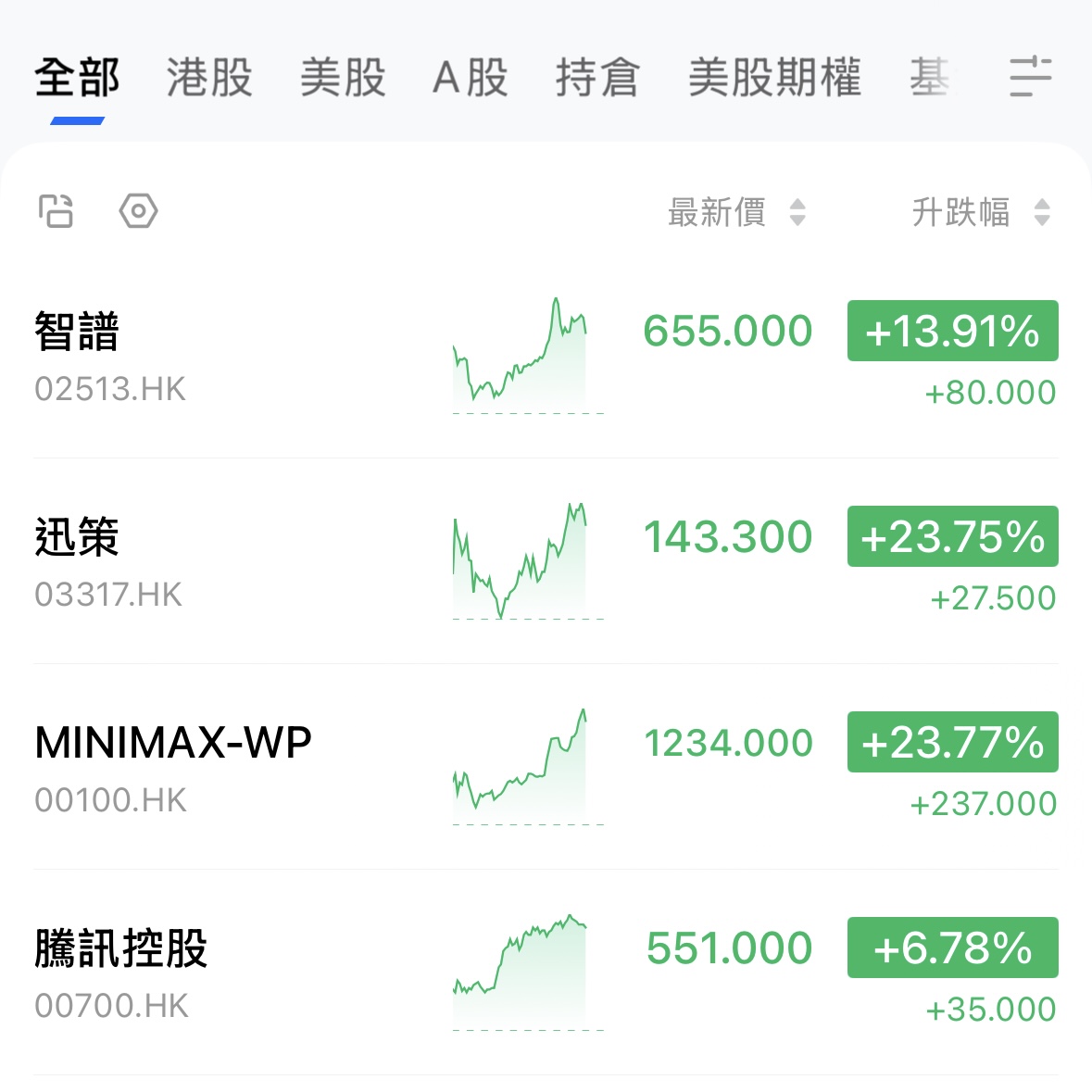
(Image Source: uSMART HK app)
Exploding in Open-Source Communities and Social Media
OpenClaw has also made a remarkable impact in open-source communities. After its release, it quickly spread among developers, gaining significant attention and discussion. Increasing numbers of developers are experimenting with local deployment or creating new AI automation tools.
At the same time, social media has been flooded with user experiences. Some use it to organize data, others automate workflows, and some manage schedules. The trend of AI shifting from “question-answering assistants” to “task executors” has made OpenClaw a hot topic.
The Era of AI Agents Is Coming
The popularity of OpenClaw reflects a larger trend. In recent years, AI has mostly been limited to conversation and content generation. Now, more companies are exploring AI’s ability to perform tasks autonomously. If this technology continues to develop, everyone may eventually have a constantly online AI assistant capable of handling routine tasks, potentially becoming a personal or corporate “digital employee.”


More Content