Investment CoursesSurge in Optical Fiber Prices Sparks Hong Kong Stocks: Is the Telecom Industry Entering a New Cycle of Prosperity?
On the morning of March 24, Yangtze Optical Fibre and Cable (06869.HK) surged more than 8% intraday, closing up 8.64% at HKD 158.5, with a turnover of HKD 20.41 billion. The stock became one of the focal points in the Hong Kong telecom sector. Although the gains narrowed later in the session, trading volume expanded significantly, reflecting heightened market attention. Market consensus attributes this price movement primarily to the unexpected surge in optical fiber and cable prices.
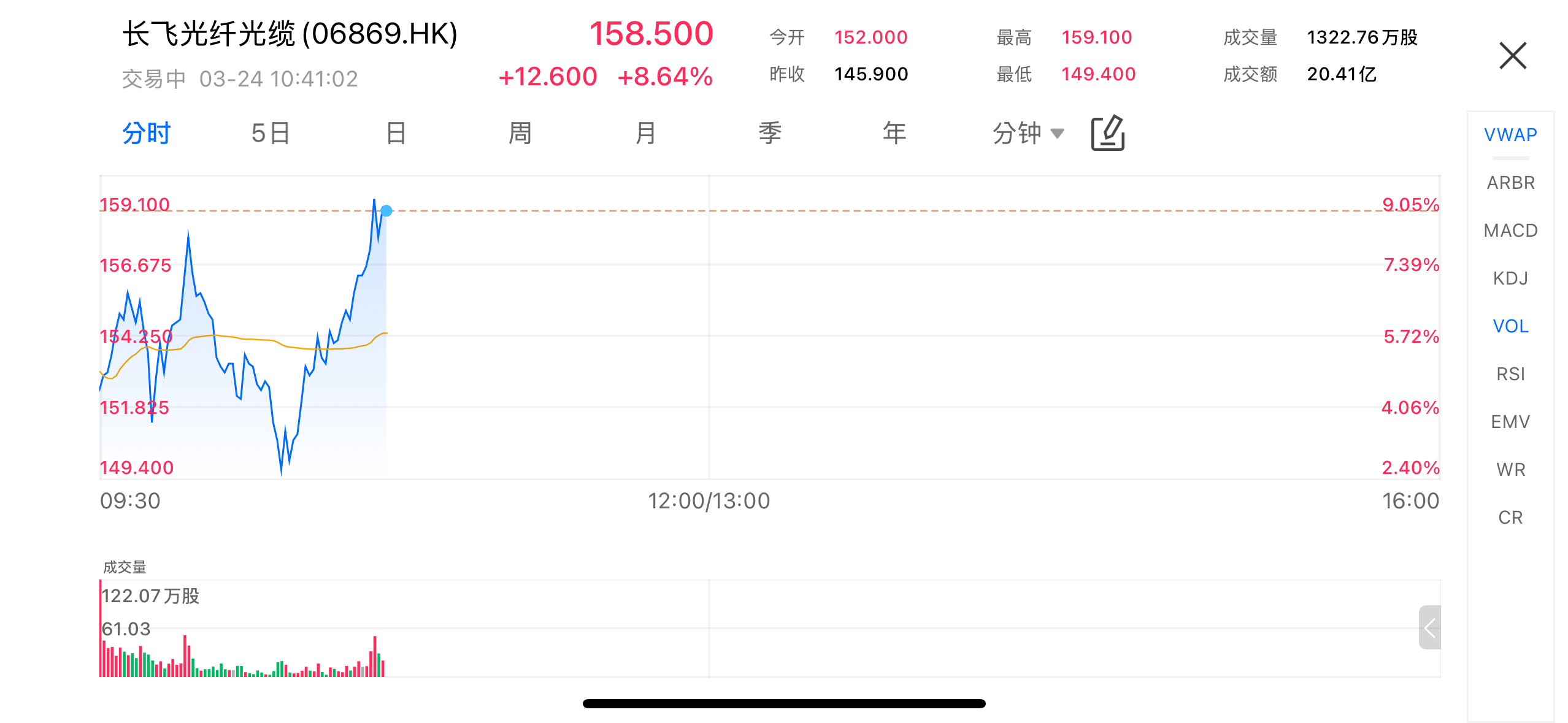
(Image source: uSMART HK app)
Tender Prices Double, Signaling a Strong Price-Rise Cycle
From a fundamental perspective, the optical fiber and cable industry is undergoing a rare price revaluation. Recently, regional branches of China Telecom launched a new round of emergency procurement, with prices for mainstream models, such as G.652D fiber optic cables, rising sharply. Compared with the beginning of the year, some product prices have doubled within just two months, far exceeding previous market expectations.
This trend sends two key signals: first, telecom operators’ demand for optical networks remains robust; second, supply-side constraints are becoming more pronounced. Especially in emergency procurement scenarios, winning bids at high prices reflect a “first-come, first-served” market feature, indicating that the supply-demand relationship clearly favors upstream producers.
Supply-Demand Mismatch Supports Sustained Price Growth
From an industry logic perspective, this price increase is not a short-term disturbance but may indicate a cyclical inflection point. On the demand side, the deepening coverage of 5G networks, the expansion of computing infrastructure, and surging data center interconnection requirements all heighten the importance of optical fiber as a core transmission medium. Particularly under the rapid growth of AI computing demand, the need for high-density and stable data transmission further drives up optical fiber consumption.
On the supply side, capacity expansion for fiber preforms has long lead times, and the industry is highly concentrated, making it difficult to quickly release new output in the short term. This structural imbalance—rapidly growing demand coupled with limited supply elasticity—provides a foundation for sustained price increases.
From “Price Wars” to “Profit Recovery”: Industry Logic Is Reshaping
It is worth noting that in recent years, the optical fiber and cable industry has been under prolonged low-price competition, putting pressure on corporate profitability. The current rapid price rise signals a shift from a volume-for-price model to a volume-and-price growth model. For leading companies such as Yangtze Optical Fibre and Cable, which hold advantages in production capacity, technology, and client resources, this change allows faster profit recovery during the price upcycle and may even expand market share.
Conclusion: A “Previously Undervalued” Prosperity Cycle May Have Begun
Overall, the recent surge in optical fiber and cable prices is more than a simple supply-demand fluctuation. It may indicate that the industry has entered a new upward cycle. For investors, the focus should not only be on short-term price gains but on identifying a long-term trend driven by computing infrastructure demand. With sustained demand growth and supply constraints coexisting, the optical communications industry may be entering a rare “Davis Double-Click” opportunity.
How to Buy Yangtze Optical Fibre and Cable via on uSMART
After logging into the uSMART HK app, click the “Search” button in the top-right corner of the page, enter the ticker code(06869.HK), and navigate to the details page to view transaction details and historical trends. Click the “Trade” button in the bottom-right corner, select the trade type, and submit your order after filling in the transaction conditions.
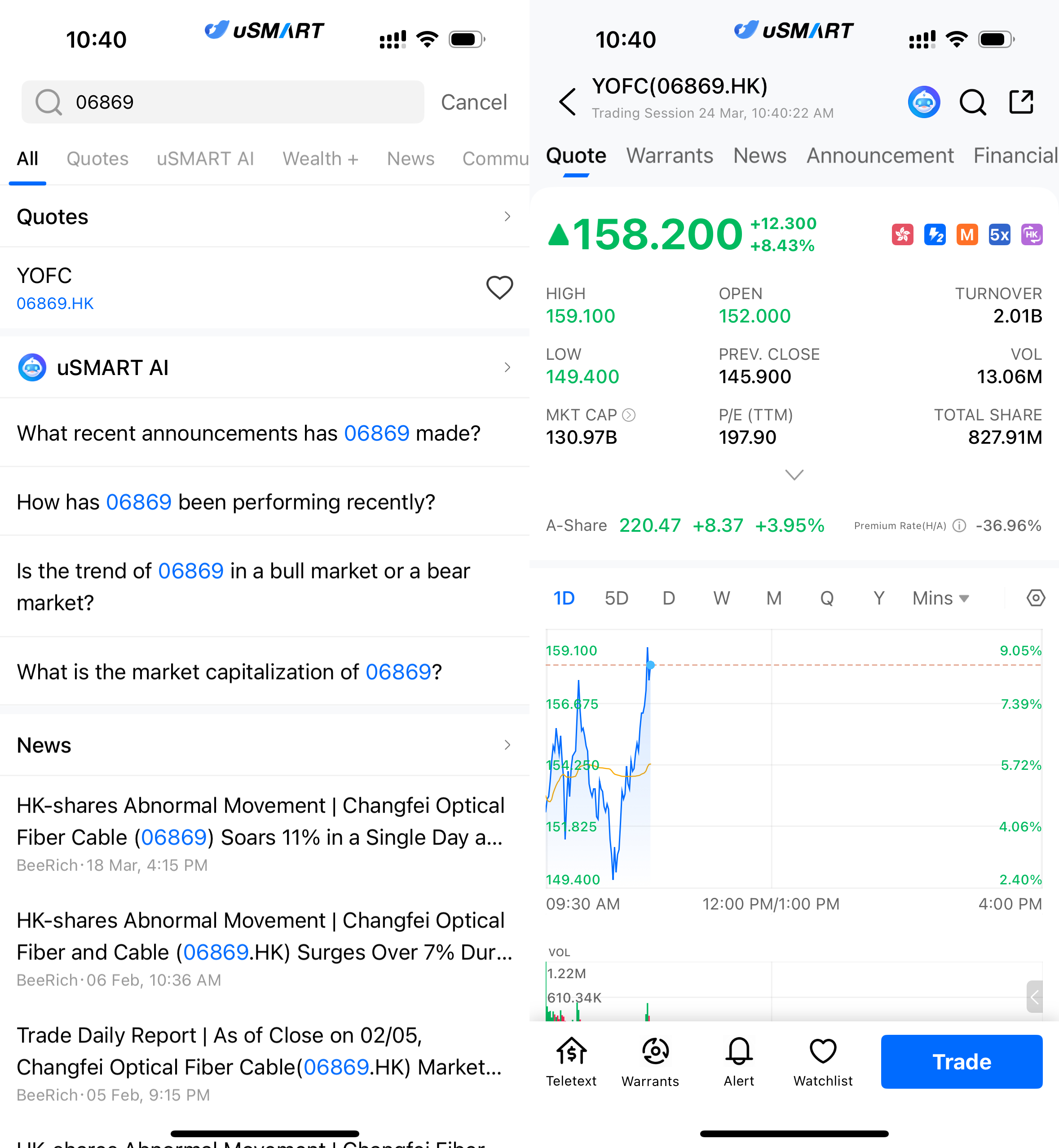
(Image Source: uSMART HK app)


More Content