Market NewsAmazon Q3 Results Beat Expectations, AWS Drives Revenue Growth; Stock Surges After Earnings Release
Amazon.com, Inc. (AMZN.US), the U.S. e-commerce and cloud computing giant, released its financial results for the third quarter (Q3) of fiscal year 2025, ending September 30, on October 30. Following the earnings announcement, the stock surged approximately 9% on October 31 and rose another 4% on November 3, marking a cumulative increase of around 13%.
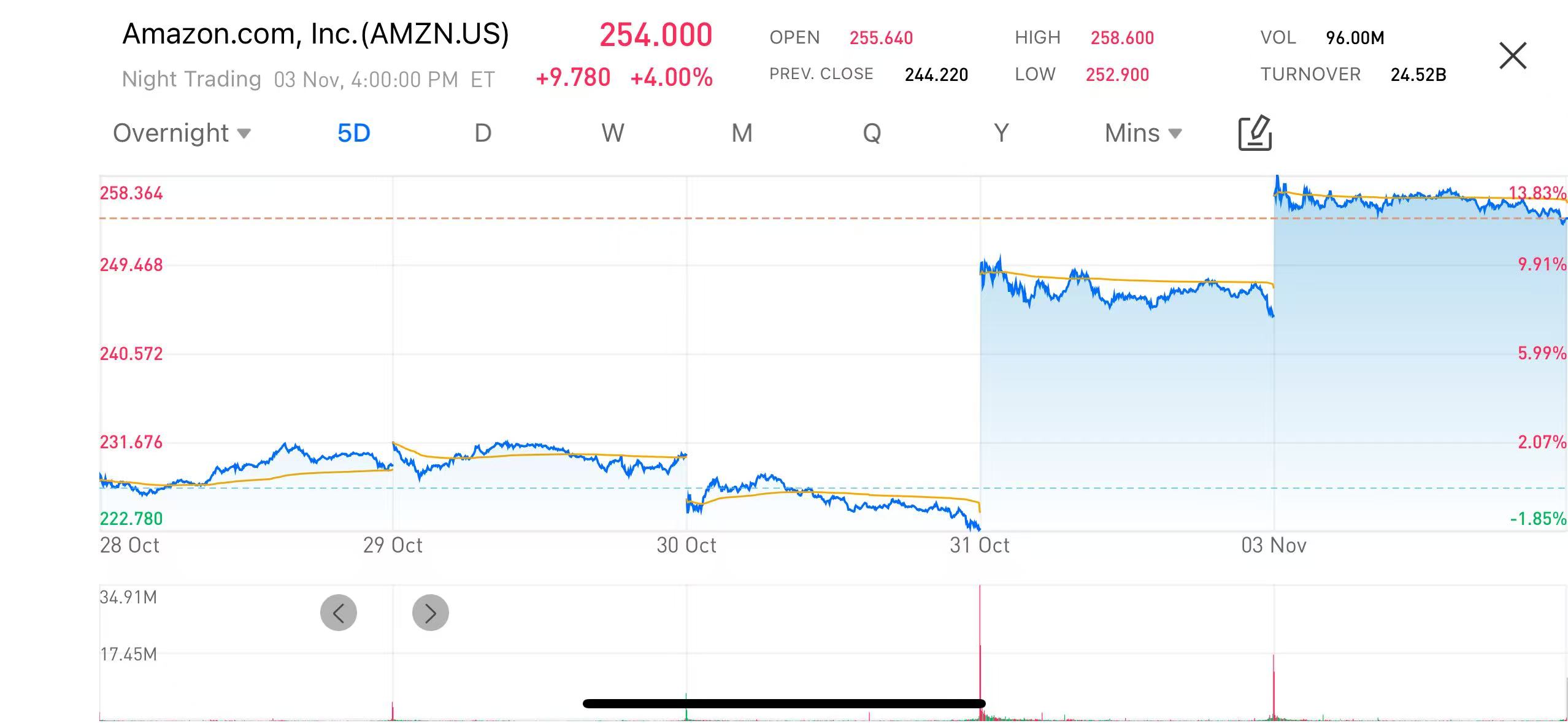
(Image Source: uSMART HK app)
Earnings Highlight: Revenue and Profit Exceed Expectations
According to the earnings report, Amazon posted total revenue of approximately US$180.2 billion in Q3, representing a year-over-year increase of about 13%. The company’s cloud segment AWS generated sales of roughly US$33.0 billion, up 20% from the same period last year, driving overall growth. North America operations delivered sales of approximately US$106.3 billion (+11% YoY), while international sales reached around US$40.9 billion (+14% YoY). Net income rose to about US$21.2 billion, with diluted earnings per share (EPS) of US$1.95.
Key Financial Metrics:
|
Item |
Q3 2024 |
Q3 2025 |
YoY Change |
|
Total Revenue |
US$158.9 billion |
US$180.2 billion |
+13% |
|
AWS Revenue |
US$27.45 billion |
US$33.01 billion |
+20% |
|
Net Income |
US$15.3 billion |
US$21.2 billion |
+38% |
|
EPS |
US$1.43 |
US$1.95 |
+36% |
(Table Source: Amazon Q3 Earnings Report)
Cloud Leads the Way: AWS Fuels Profit Recovery
As a key and profitable division for Amazon, AWS once again drove the company’s overall performance. During Q3, AWS generated US$33.01 billion in revenue, up 20% YoY—significantly exceeding market expectations of US$31.5 billion—and marked the fastest growth since late 2022.
Management stated during the earnings call that surging demand for generative AI and cloud-native enterprise architectures has led to accelerated spending from large customers, while medium and small clients have also gradually resumed “pay-as-you-go” usage. By comparison, Microsoft Azure and Google Cloud posted Q3 growth rates of 29% and 22%, respectively. While AWS did not top the growth chart, it remains the industry leader by revenue scale.
Analysts note that if AWS can sustain a quarterly growth rate above 15%, coupled with the potential scale-up of AI services, Amazon could re-enter a “high-growth, high-profit” cycle, further enhancing profit margins and free cash flow resilience.
Investing in the Future: AI and Infrastructure at the Core
With growth gaining momentum, Amazon significantly increased investments in AI and cloud infrastructure this quarter. CEO Andy Jassy emphasized in his letter to shareholders that the company will continue to focus on three strategic pillars over the coming years: “AI + Cloud + E-commerce logistics.”
These investments include: expanding cloud data centers and compute capacity; introducing new Trainium 2 and Inferentia 3 chips for multi-modal AI applications; improving North American warehousing with faster delivery capabilities; and launching the Amazon Q generative AI platform for developers and businesses, covering use cases such as customer service, content creation, and coding.
Although these initiatives have pushed up capital expenditures and depreciation costs in the short term, management stressed that these are “investments for growth over the next five years,” with gains from AWS, advertising, and subscription services expected to offset the associated financial pressure.
Risks and Challenges: Cash Flow Volatility and Macro Uncertainty
Despite strong results, Amazon still faces several risks. Free cash flow (FCF) over the past 12 months fell to US$14.8 billion, down from US$20.1 billion in the previous quarter, reflecting near-term financial strain from expansion efforts. The company also recognized one-off expenses totaling approximately US$4.3 billion related to legal settlements, severance, and inventory adjustments, which weighed on operating profit. Moreover, persistent inflation, pressure on consumer spending, and intensifying cloud competition remain key challenges. Amazon must continue balancing growth with operational efficiency to sustain long-term resilience.
How to Buy Google on uSMART
After logging into the uSMART HK App, tap the search icon in the top-right corner, enter the stock code (GOOG.US), and open the details page to view trading and historical information. Then tap “Trade” at the bottom-right, select the order type, enter your trading conditions, and submit your order.
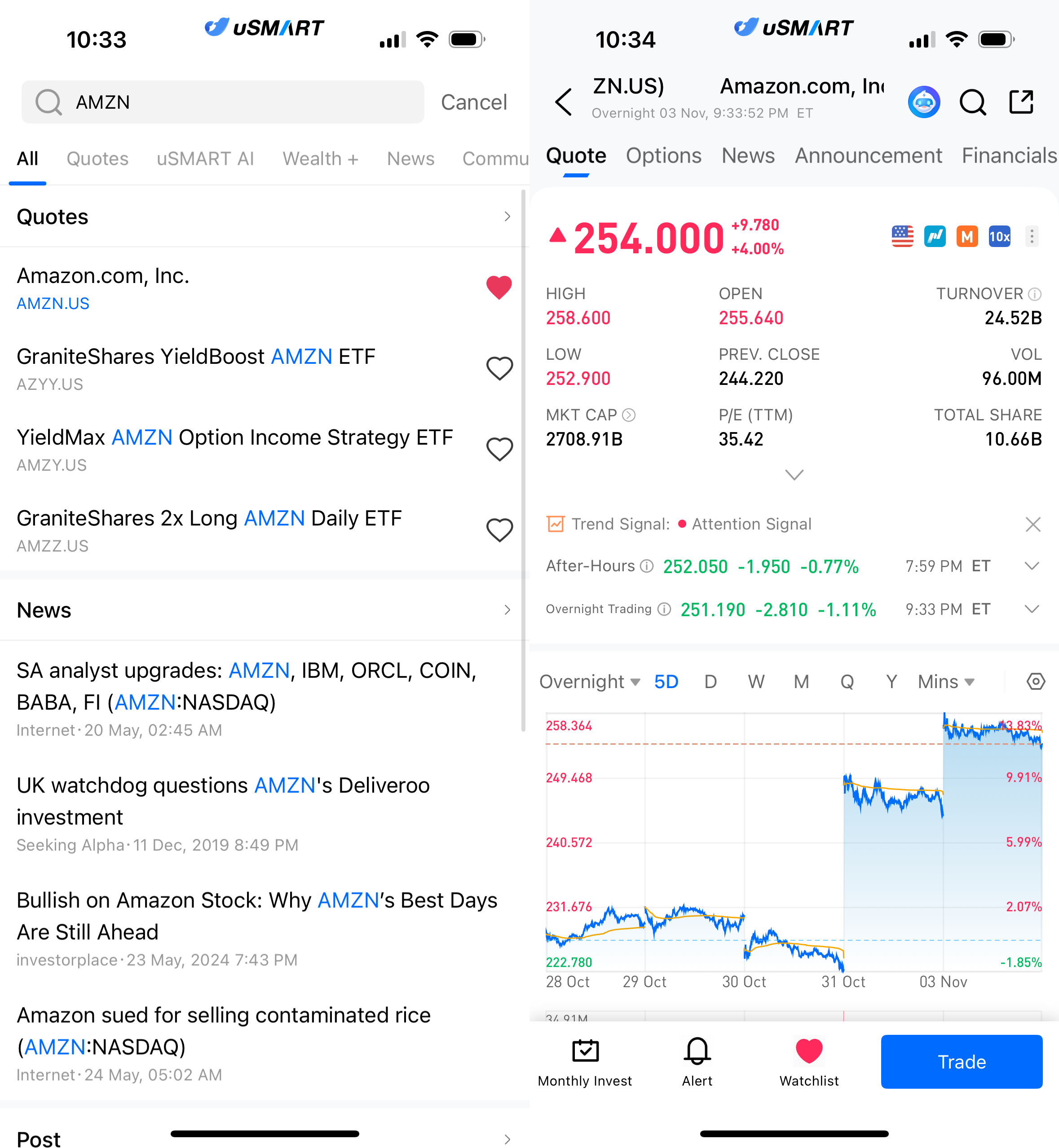 (Image Source: uSMART HK app)


More Content